
Technical Guides
How to Calculate Corrugator Adhesive Consumption: Formulas and Benchmarks
Practical guide to calculating and optimizing starch adhesive consumption on corrugating lines, with industry benchmarks and cost-saving strategies.
On this page
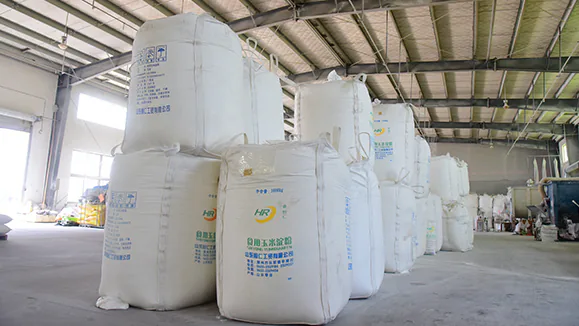
Adhesive consumption is a significant operating cost for corrugated board manufacturers. Understanding how to calculate, benchmark, and optimize consumption helps control costs and improve quality.
Basic Consumption Formula
Adhesive Consumption (g/m²) = Total Adhesive Used (kg) × 1000 / Board Produced (m²)
Typical Consumption Benchmarks
By Board Type
- Single-face (2-ply): 4-6 g/m²
- 3-ply board: 6-9 g/m²
- 5-ply board: 12-18 g/m²
- 7-ply board: 18-26 g/m²
By Application Point
- Single facer (per flute layer): 4-6 g/m²
- Double backer (per glue line): 3-5 g/m²
Factors Affecting Consumption
Paper Properties
- Porosity: More porous paper absorbs more adhesive
- Surface smoothness: Rough surfaces need more adhesive
- Basis weight: Heavier papers typically need more
- Recycled content: Higher recycled = more porous
Flute Type
- A-flute: More flutes/meter = more adhesive
- B-flute: Medium consumption
- C-flute: Lower than A, higher than B
- E/F flute: Highest consumption per meter (many flutes)
Machine Settings
- Glue gap setting: Wider gap = more consumption
- Applicator roll speed: Faster = more pickup
- Adhesive viscosity: Lower viscosity = more penetration
- Line speed: Higher speeds may need more adhesive
How to Measure Consumption
Method 1: Tank Level Monitoring
- Record adhesive tank level at shift start
- Record tank level at shift end
- Account for any additions during shift
- Calculate total consumption
- Divide by total m² produced
Method 2: Weight-Based Measurement
- Weigh adhesive ingredients added
- Track production output
- Calculate g/m² consumption
- Compare to benchmarks
Method 3: Flow Meter Monitoring
- Install flow meters on adhesive supply lines
- Integrate with production tracking system
- Calculate real-time consumption
Cost Calculation
Monthly Adhesive Cost = (Monthly m² Production) × (g/m² Consumption) × ($/g Adhesive Cost)
Example
- Monthly production: 2,000,000 m²
- Consumption: 14 g/m² (5-ply)
- Adhesive cost: $0.10/kg = $0.0001/g
- Monthly cost: 2,000,000 × 14 × $0.0001 = $2,800
Optimization Strategies
- Glue Gap Optimization:
- Adjust to minimum gap that maintains bond quality
- Regular calibration and maintenance
- Potential savings: 10-20%
- Viscosity Management:
- Maintain consistent viscosity
- Adjust for ambient conditions
- Monitor and control temperature
- Paper Selection:
- Work with paper suppliers on porosity
- Consider surface-treated papers
- Balance paper cost vs. adhesive cost
- Adhesive Formula Optimization:
- Work with adhesive supplier on custom formulas
- Consider instant-setting adhesives for lower consumption
- Xuegong adhesives are formulated for optimal coverage
Xuegong provides technical support to help customers optimize adhesive consumption. Our instant-setting adhesives often achieve lower consumption than traditional formulas while providing superior bond strength.
More in Technical Guides
Honeycomb Facing Glue: Floor Mixing for the Two Routes
Mix honeycomb facing glue on one of two routes. Water only uses 25 kg of powder and 30–40 kg of water. Adding starch uses 25 kg and 40–60 kg, in two tanks. Do not use this sheet on core glue.
Honeycomb Lines: Heat, Press, and the Two Speed Windows
Honeycomb core making is about 10–200 m/min. Face laminating is about 4–30 m/min. Cold press and hot press both exist. A slow start can run with the heater off.
Honeycomb Glue Film and Dry Speed: Slow, Fast, Quick, or Instant
Honeycomb line glue can be specified with an elastic or a rigid film, and with dry speed from slow to instant. On water-only facing glue, less water dries faster. Do not go below 30 kg of water.